Apollo, Artemis, Carroll, and One Hundred Tampons

[Edited to add: I know that the photos are being dicky. I'll fix them when I have the time and energy. Thank you for your patience.]
A joke that isn’t really a joke about me is that I spent most of my childhood with my nose in a book. It’s why I have such a bodacious vocabulary, and it’s where I began my lifelong fascination with aviation and astronomy. Books are where I got my learning. However, bonding with my birth-dad as he pointed out constellations and planets in the night sky is where I learned to love space.
My birth-dad was lucky enough to be alive for Mercury, Gemini, and Apollo. He was twenty-nine when the Eagle landed on the Moon, and he lived long enough to see the photos from New Horizons taken as it zipped past Pluto. Like several other members of his side of the family, he was a civil aviator and was also a member of the Experimental Aircraft Association (or EAA). I often wonder if he aspired to work for NASA. Regardless, I knew that as long as he was around, I could always call him up with the latest space news and say, “Hey, did you see that?” He’d laugh and say, “Yup.”
I was always envious of him getting to witness the Apollo program as it progressed. I dreamed of turning on the TV to watch a giant rocket loft up into the sky atop a molten plume, of gasping in awe as a spacesuited foot touched down for the first time on a previously unexplored world. I’m still waiting for that. The closest I’ve come is seeing the brief clip of Ingenuity whirring up into the air on Mars.
SLS Static Booster Test 2.
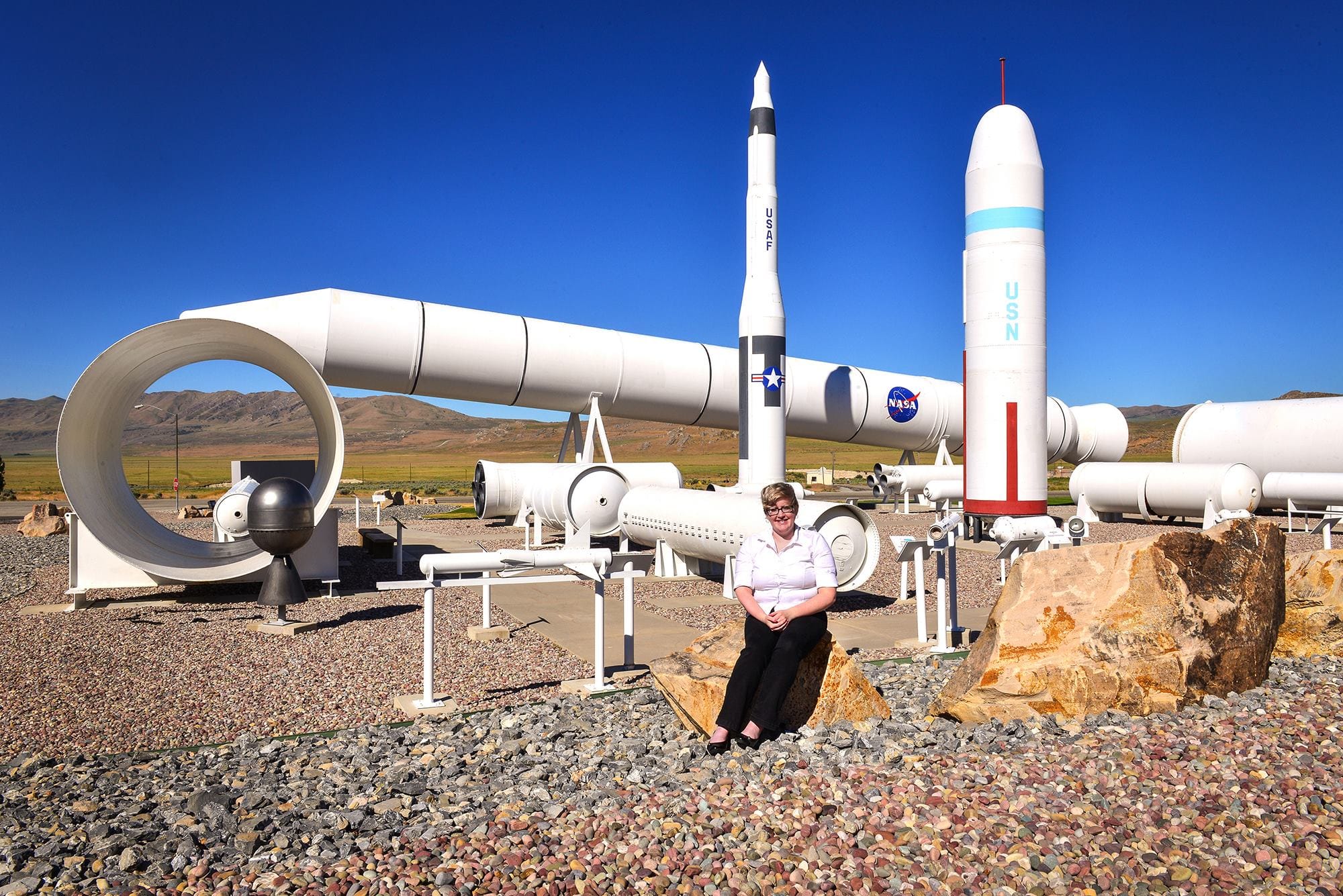
So, back to the Artemis program. It’s hard for me to articulate my thoughts about it or to say anything that hasn’t already been more poignantly expressed elsewhere. What I can tell you is that I’m glad that I took the risk and applied for an undergraduate internship at Orbital ATK’s Flight Systems Division in Utah. (Note: Orbital ATK was bought out by Northrop Grumman.) I learned how solid rocket fuel is made and I still remember how it smells. I remember standing in the warehouse of the booster refurbishment facility, looking at those pristine white cylinders and being filled with awe. I was in the same room with hardware that would take humans back to the Moon, and maybe even to Mars.
I worked on NASA’s commercial space partner public education and outreach team at the EAA AirVenture show in 2017 and helped operate a VR sim machine that showed an SLS launch. Lots of kids tried it out, mostly boys. One little girl asked me hesitantly if she could try it too, because she didn’t know if it was for her. My response was a firm, kind yes. Space is for everyone, I told her, and that includes you.
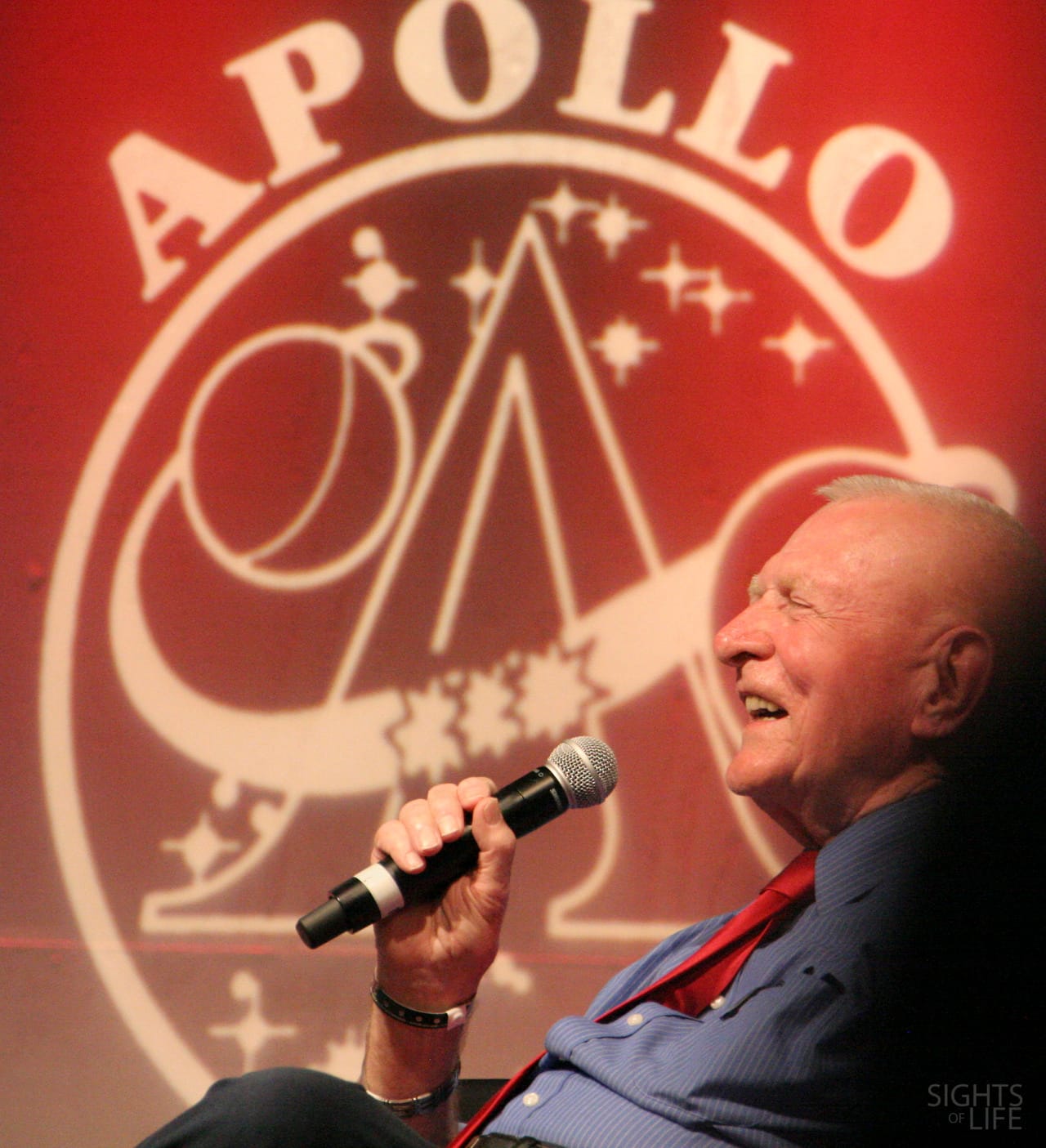
AirVenture hosted a reunion of most of the surviving Apollo astronauts that year. I got to sit in the fifth row of that panel and I eagerly snapped photos and soaked up their stories. It was nothing short of magical. But would we see anything like Apollo in my lifetime, I wondered?
With each bit of news about Orion and SLS development, that likelihood felt ever closer. I read the delays and the criticism of SLS’ massive budget. Those criticisms are valid, but I look at NASA’s budget overall and the egregious sums that we spend on things that arguably don’t benefit the American public and I have to roll my eyes a little bit.
I stayed up late to watch the first Artemis launch, wrapped cozily in my bathrobe and fuzzy slippers with a mug of chamomile tea. I cheered and I cried. A story that I’d told people was coming had finally written its first big chapter.
I drank in the coverage for Artemis II. I was disappointed when they postponed the launch from my birthday weekend in February to the beginning of April, but I knew that it was for safety purposes. Crewed spaceflight’s history is pockmarked with notable tragedies, and each time NASA has taken that cost seriously and learned from it. Safety protocols are written in the precious currency of human lives. So when they confirmed April 1st as the launch date, I lit candles and incense and engaged in all of my superstitions. This is nothing new for space programs, either; Mission Control had a stash of lucky peanuts for staff to snack on during the days of Apollo, so I may be forgiven.
And oh, that glorious launch. I cheered, I clapped. I sobbed buckets. I missed my birth-dad, who passed in 2020 after a long (non-COVID) illness. I wish he could have experienced this with me in person.
Did you see that, Pops? Wasn’t that cool?
One of the biggest critiques of Artemis that I’ve seen beyond its budget is that we aren’t achieving anything new and that it looks just like what we did in the 60s and 70s. That critique is valid to an extent but ignores the years of behind-the-scenes progress. The boosters are recycled and repurposed Space Shuttle tech, and they still work. During launch, staff turned to a repurposed piece of Shuttle communications tech to deal with a sudden glitch that could have stopped Artemis II from launching. Russia is using craft that have changed very little visually from the 60s and 70s and function as the workhorses that take crew and cargo to the ISS on Soyuz and Progress crafts respectively, so it makes sense to me that the U.S. would similarly recycle materials and ideas.
If you have beef with the perceived lack of progress, take it up with Congress and press them for better funding. Richard Nixon is also largely to blame, but he no longer has any direct influence. (Thank god.) But please, please, please, maybe wait a week or two before you bring up your critiques around people who are basking in this collective effervescence.
What we got on Artemis II was beyond science. We got hope. We got poetry, joy, wonder, and pure glee during a time when we really, really need it. (As one youthful observer notably observed, “We’re going back to the freaking MOON!” Hell yeah, buddy.) We got random Nutella sightings, astronauts giggling as they experienced the joy of zero gravity, “Pink Pony Club” as a wakeup song, and the crew embracing each other after requesting that a crater be named for the mission commander’s tragically passed wife, Carroll. We were blessed with the phrase “go for toilet” added into the public lexicon, and we got scads of utterly jaw-dropping photographs of the far side of the Moon.
I asked my birth-dad to keep the crew safe while they were in space, and I sobbed buckets once more when I saw that Integrity and her crew were to be retrieved by a next-generation variant of the ship that my brother had served on while in the Navy. My brother served on the USS Duluth, LPD-6. He took his own life in its armory while the ship was in drydock in San Diego, and his ashes were buried at sea in the Pacific. When I saw the USS John P. Murtha, LPD-26, going out to retrieve the capsule and the astronauts, I couldn’t help but grin through my tears.
As I wrap up this ramble, I would be remiss if I didn’t mention that my birth-dad’s younger sister Janet worked at NASA Dryden (now Armstrong) along with her wife, my aunt Leslie. Janet was an accountant and Leslie designed uncrewed weather observation craft. They both passed from cancer. I would love to have heard their observations on Artemis and what they think about so many women’s voices and hands in the program. I’d ask them what has changed about the agency and what they think has stayed the same.
Last, but certainly not least, I find myself in awe of Christina Koch, her biceps, her infectious enthusiasm, and her ability to fix a space toilet. We’ve come so far since the days when NASA allegedly asked Sally Ride if one hundred tampons would be enough for a female astronaut’s time in space. And if I don’t hear stories of dads using the phrase “go for toilet” on family road trips, I’ll be a little bit disappointed.
Artemis might not make huge strides anytime soon, but it reminds us of human creativity, bravery, and joy. That might not be science, but it is medicine.